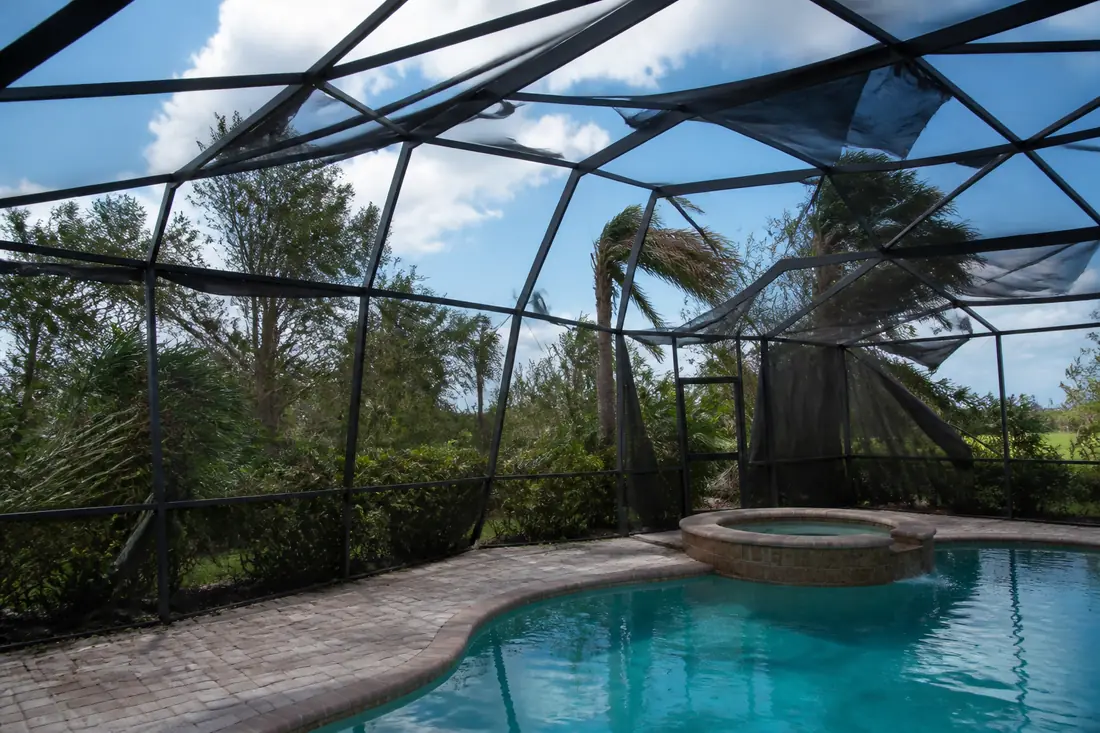
The estimator uses two words as though they were the same word. “We’ll repair the damage.” “We’ll replace that section.” From a homeowner’s chair those describe the same afternoon of work.
To the code they are different categories with different consequences. A repair may put things back the way they were. An alteration is construction that is not a repair, and it is held against a different standard. The line between them is where most of the money in a storm claim actually sits, and it is drawn by two numbers neither of which is 50.
Last reviewed: 17 September 2026 against the Florida Building Code, Existing Building, 8th Edition (2023). Section numbers are from that edition; the Code is revised on a cycle and numbering moves, so confirm against the edition your jurisdiction has adopted.
Two definitions, and everything follows from them
The Code’s definitions chapter is brief about both.
A repair is “the reconstruction or renewal of any part of an existing building for the purpose of its maintenance or to correct damage.”
An alteration is “any construction or renovation to an existing structure other than a repair or addition,” and alterations are classified as Level 1, Level 2 and Level 3.
So alteration is the residual category. Work is an alteration because it is not a repair, not because it reached a threshold.
Chapter 4 then expands what repair covers. Section 401.1 says repairs “include the patching or restoration or replacement of damaged materials, elements, equipment or fixtures for the purpose of maintaining such components in good or sound condition with respect to existing loads or performance requirements.”
Note the last phrase: existing loads or performance requirements. A repair is measured against what the structure was already asked to do, not against what a new structure would be asked to do. That is the whole advantage of staying on the repair side of the line.
Two provisions that make repair work practical
Section 401.3 sets the boundary: “The work shall not make the building less conforming than it was before the repair was undertaken.” Not more conforming — just not less. A repair is not an opportunity the code takes to upgrade the structure.
Section 401.4 is the one worth knowing on a partially damaged enclosure: “Work on nondamaged components that is necessary for the required repair of damaged components shall be considered part of the repair and shall not be subject to the provisions of Chapter 7, 8, 9, 10 or 11.”
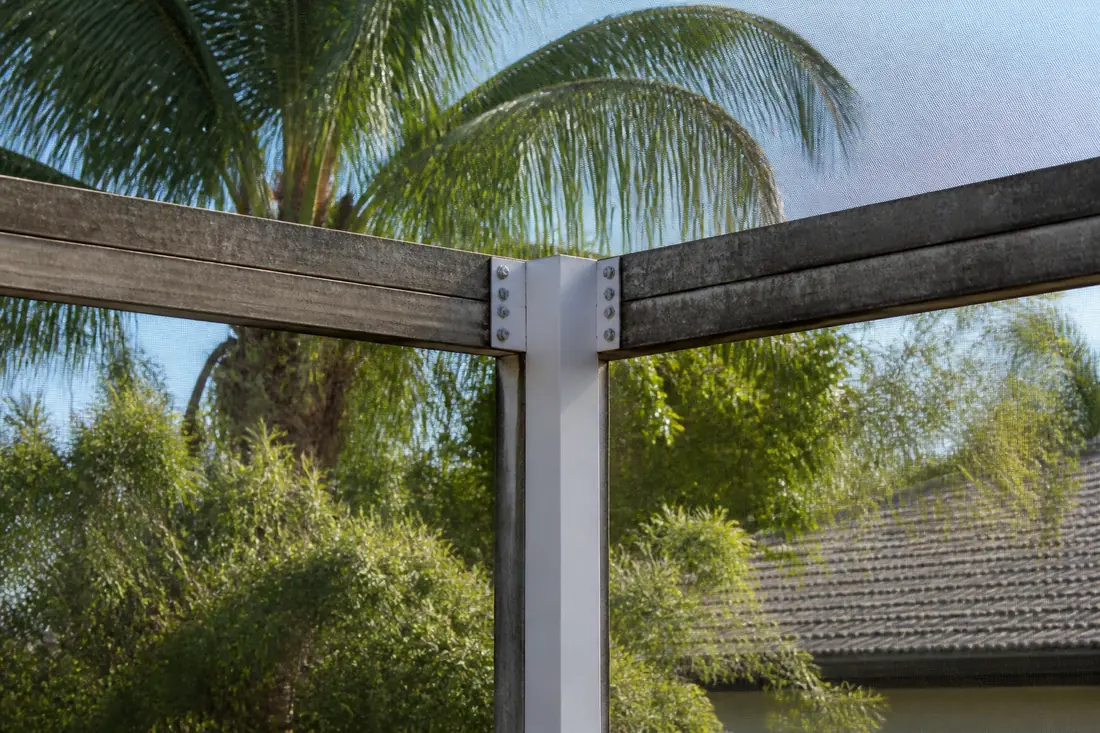
Chapters 7 through 9 are the three levels of alteration, Chapter 10 is change of occupancy and Chapter 11 is additions. So touching sound material in order to get at damaged material does not convert the job into an alteration. Taking down two good panels to replace a bent beam between them stays a repair.
Section 402.1 governs what goes back: materials permitted by the applicable code for new construction shall be used, and “like materials shall be permitted for repairs provided no dangerous or unsafe condition, as defined in Chapter 2, is created.” Hazardous materials such as asbestos and lead-based paint may not be used where the code for new construction would not permit them.
Like-for-like is expressly allowed. With a condition attached, and the condition is about safety rather than about conformity.
Where glazing is not covered by like-for-like
Section 402.2 carves out an exception to the like-materials principle: “Replacement glazing in hazardous locations shall comply with the safety glazing requirements of the Florida Building Code, Building or Florida Building Code, Residential as applicable.”
Its own exception then reads: “Glass block walls, louvered windows, and jalousies repaired with like materials.”
That matters on enclosures that incorporate glass — a knee wall with glazed panels, a lanai partly glazed and partly screened. Screen is not glazing, but the moment a repair touches glass in a hazardous location, safety glazing rules apply rather than like-for-like.
The number that changes everything: substantial structural damage
Section 406 covers structural repairs, and it splits on a defined term.
Section 406.2.1 is the good outcome: “For damage less than substantial structural damage, the damaged elements shall be permitted to be restored to their predamage condition.”
Predamage condition. Exactly as it was.
Substantial structural damage is defined in Chapter 2 as a condition where one or both of two things apply:
The vertical elements of the lateral force-resisting system “have suffered damage such that the lateral load-carrying capacity of any story in any horizontal direction has been reduced by more than 33 percent from its predamage condition.”
Or the capacity of any vertical component carrying gravity load, or any group of such components, “that supports more than 30 percent of the total area of the structure’s floor(s) and roof(s) has been reduced more than 20 percent from its predamage condition and the remaining capacity of such affected elements, with respect to all dead and live loads, is less than 75 percent of that required by the Florida Building Code, Building for new buildings of similar structure, purpose and location.”
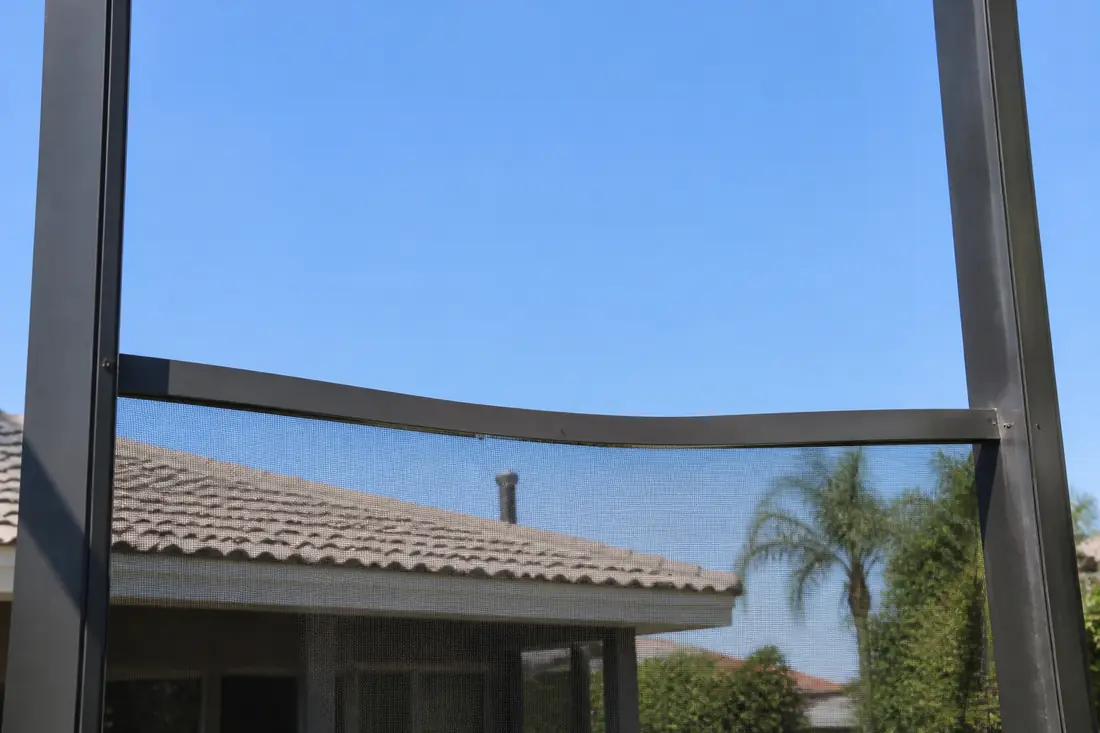
Three numbers, and none of them is a count of broken parts. 33 percent of lateral capacity. 30 percent of supported area, with a 20 percent capacity loss, and a remaining capacity below 75 percent of what a new structure would need.
These are engineering determinations, not visual ones. Which is the first practical takeaway: whether a storm-damaged cage crosses this line is not something an estimator settles from the driveway.
What happens above the line
If the vertical elements of the lateral force-resisting system have sustained substantial structural damage, Section 406.2.2 requires the building to be evaluated under Section 406.2.2.1 and then either repaired or repaired and rehabilitated depending on the result.
The evaluation itself is specific. The building “shall be evaluated by a registered design professional, and the evaluation findings shall be submitted to the code official. The evaluation shall establish whether the damaged building, if repaired to its predamage state, would comply with the provisions of the Florida Building Code, Building for load combinations that include wind effects.”
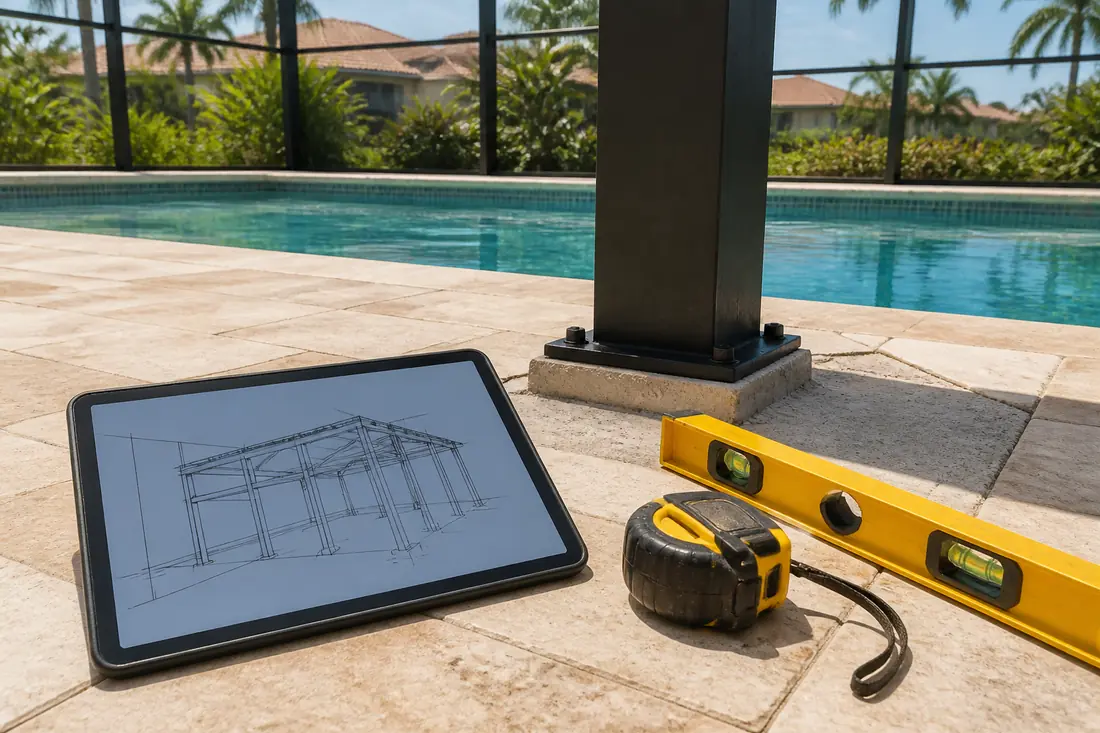
Then the fork. Under Section 406.2.2.2, if the evaluation establishes that the building in its predamage condition complied, “the damaged elements shall be permitted to be restored to their predamage condition.” Under Section 406.2.2.3, if the evaluation does not establish that, “the building shall be rehabilitated to comply” with the provisions referenced there.
Read that carefully, because it is the most consequential sentence in the chapter for anyone with an older enclosure. The question is not whether the damage was severe. It is whether the structure, as it was before the storm, would have satisfied current wind load combinations. A cage built to an older code, damaged past the threshold, can trip into rehabilitation not because of the damage but because of what it always was.
Section 406.2.3 handles the gravity side: gravity load-carrying components that have sustained substantial structural damage “shall be rehabilitated to comply with the applicable provisions for dead and live loads,” and undamaged components receiving loads from rehabilitated components “shall also be rehabilitated if required to comply with the design loads of the rehabilitation design.”
So rehabilitation propagates along the load path. That is how a job that started at one corner reaches the opposite column.
The rules that apply regardless
Section 406.1 states two things that hold no matter the scope: “Regardless of the extent of structural or nonstructural damage, dangerous conditions shall be eliminated.” And “regardless of the scope of repair, new structural members and connections used for repair or rehabilitation shall comply with the detailing provisions of the Florida Building Code, Building for new buildings of similar structure, purpose and location.”
The second is easy to miss. Old members may stay. New members and their connections are detailed to current requirements. A repair does not license reproducing an outdated connection.
Section 401.5 adds the flood layer: in flood hazard areas, repairs that constitute substantial improvement require the building to comply with Section 1612 of the Florida Building Code, Building. And Section 401.6 covers structures seaward of the coastal construction line, which must be designed to resist the predicted forces of a 100-year storm event in accordance with Section 3109.
What a professional establishes, in order
Whether the damage is structural at all. Torn mesh, failed splines and bent trim are not lateral-system damage.
Which members are damaged and what they carry. The 30 percent test is about supported floor and roof area, so it is a question about the frame’s load path.
Whether the thresholds are crossed. An engineering determination, and the honest answer on a marginal case is that somebody has to calculate it.
If they are, whether the predamage structure complied. Section 406.2.2.1 asks about load combinations that include wind effects, and that is the question that decides repair against rehabilitation.
What new members and connections are being introduced. Section 406.1 holds those to current detailing whatever the classification.
Repair, rebuild, or find out first
The decision is usually framed as repair against rebuild, and it is better framed as a sequence.
Below the threshold, restoring to predamage condition is expressly permitted and is almost always the cheaper path. Section 401.4’s protection for related work means a substantial-looking repair can still be a repair.
Above the threshold, the cost is not the repair — it is the evaluation and whatever it reveals. On an older enclosure, the evaluation may establish that the structure never complied with current wind provisions, and rehabilitation follows.
Which makes the evaluation itself the thing worth buying early on a badly damaged cage. A rebuild quoted without it is a guess; a repair quoted without it may be a repair the code will not accept.
What drives the cost
There is no useful figure for storm damage work without knowing which members are affected, what they support, whether the thresholds are crossed, and if so what a predamage compliance evaluation concludes. Those four answers determine the category, and the category determines the scope.
The largest swing is not labor or aluminum. It is whether the job stays a repair.
Before you accept a scope of work
Ask, in writing, whether the contractor is treating the work as a repair or an alteration, and why.
If any frame member is bent, detached or fractured, ask whether substantial structural damage has been assessed and by whom. Section 406.2.2.1 names a registered design professional and requires findings to go to the code official.
Ask what new members and connections are being used, and confirm they are detailed to current provisions per Section 406.1.
If the enclosure is in a flood hazard area, ask whether the repair constitutes substantial improvement, because Section 401.5 changes the answer if it does.
And keep photographs of the enclosure before any clearing up. Predamage condition is the benchmark in three separate provisions, and the only record of it is usually whatever somebody happened to take.
The sequence that saves money is to classify the work before pricing it. Repair and alteration are not two prices for the same job — they are two different jobs, and which one you have is a finding rather than a preference.
This guide explains code provisions in plain language and is not legal advice or an engineering determination. The code edition adopted by your jurisdiction, and the code official’s and registered design professional’s determinations for a specific structure, control what is actually required.
Sources
- Florida Building Code, Existing Building, 2023, Chapter 4 — Repairs. The scope of repairs at Section 401.1; application at Section 401.2; the no-less-conforming rule at Section 401.3; related work on nondamaged components and its exclusion from Chapters 7 to 11 at Section 401.4; flood hazard areas at Section 401.5; structures seaward of the coastal construction line and the 100-year storm event at Section 401.6; new and replacement materials and the like-materials allowance at Section 402.1; replacement glazing in hazardous locations and its glass block, louvered window and jalousie exception at Section 402.2; the dangerous-conditions and new-member detailing rules at Section 406.1; restoration to predamage condition for less than substantial structural damage at Section 406.2.1; the evaluation requirement, the compliant-building and noncompliant-building outcomes at Sections 406.2.2 through 406.2.2.3; and rehabilitation of gravity load-carrying components at Section 406.2.3.
- Florida Building Code, Existing Building, 2023, Chapter 2 — Definitions. The definitions of repair and of alteration with its Level 1, 2 and 3 classification; and substantial structural damage, with the 33 percent lateral load-carrying capacity reduction and the 30 percent supported area, 20 percent capacity reduction and 75 percent remaining capacity conditions.